

What Does Aquarium Maintenance Cost?
A transparent look at aquarium maintenance cost factors — tank size, type, frequency, and scope.
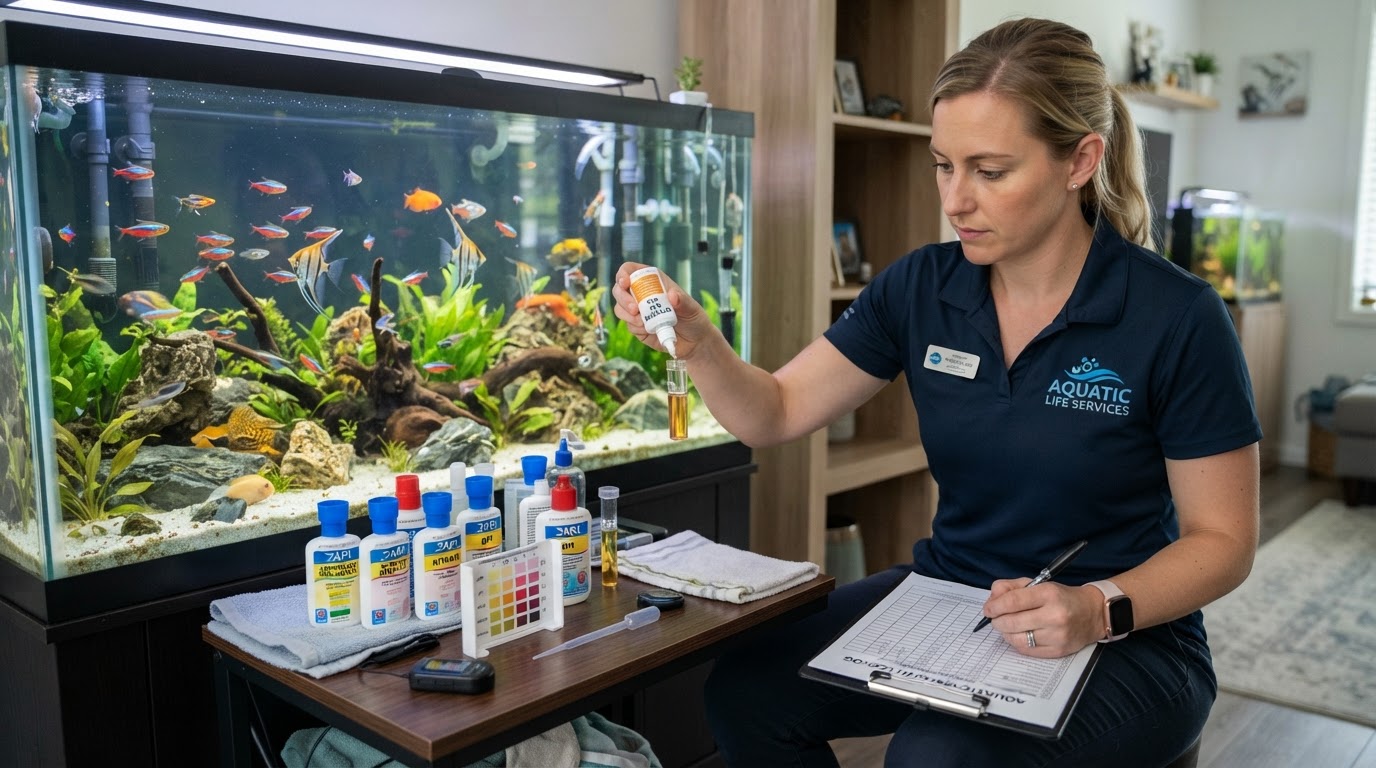
Aquarium maintenance cost depends on the tank size, type, livestock density, visit frequency, and what each visit includes, so a single headline price rarely captures the real value. The cheapest service that omits water testing and emergency response is the most expensive one the day a crisis arrives, which is why aquarium maintenance cost should be weighed against scope, not against the rate alone.
The biggest factor in aquarium maintenance cost is the tank type. A freshwater community tank is simpler and cheaper to service than a reef, because the parameters are fewer and the equipment is less complex. A reef demands salinity, alkalinity, calcium, magnesium, and trace-element testing and dosing, along with more equipment to clean and calibrate, and the time and the test gear required are reflected in the aquarium maintenance cost.
Tank size drives aquarium maintenance cost because a larger volume means more water to change, more surface to clean, and more equipment to service. A 200-gallon display takes longer to service than a 30-gallon one, and the water change alone — mixing, transporting, and draining — is a bigger task. The rate per visit scales with the volume, which is why a price quoted without the tank size is a price that will not hold.
Visit frequency affects the total aquarium maintenance cost over a year. A biweekly visit at a lower per-visit rate may cost more or less than a weekly visit at a higher rate, depending on the tank's bioload and how stable the parameters need to stay. The cadence that keeps the tank healthy is the one that determines the real cost, and a cheaper monthly visit that lets the tank drift between appointments often costs more in livestock losses than the extra visits would have.
What is included in each visit drives aquarium maintenance cost more than any other factor. Water testing, purified RODI water, equipment service, livestock observation, and documentation all take time and equipment, and a provider who includes them charges more than one who wipes the glass and leaves. Compare the scope, not the rate, because the aquarium maintenance cost that includes testing and emergency response is a different product than the one that does not.
Emergency response is a factor in aquarium maintenance cost that owners underestimate. A provider with an on-call commitment for after-hours leaks and equipment failures charges more than one who cannot be reached at night, but the first leak or heater failure is when that premium pays for itself. The cost of a livestock loss from a slow response dwarfs the cost of the on-call commitment, which is why it should be weighed as part of the value, not as an add-on.
Geographic location affects aquarium maintenance cost through travel time and local labor rates. A provider in a high-cost metro charges more than one in a smaller market, and a provider who travels an hour to reach your tank may charge a travel fee that a genuinely local provider does not. The aquarium maintenance cost that includes local dispatch and fast emergency response is worth more than a lower rate from a distant provider, and the difference shows up the day you need help fast.
Finally, weigh aquarium maintenance cost against the value of the livestock and property it protects. A tank holding hundreds or thousands of dollars of fish and coral, sitting on custom cabinetry in a finished room, is an investment that justifies professional care the way a home or a vehicle does. The aquarium maintenance cost over a year is modest compared to the cost of a single crash that neglect causes, and the provider who keeps the system stable is a safeguard, not an expense — and the peace of mind that comes with knowing the tank is cared for is part of what the cost delivers.
Need professional help with residential aquarium maintenance?
Connect with listed aquarium specialists serving residential and commercial facilities.