

Building a Reliable Aquarium Maintenance Routine
Weekly, monthly, and seasonal aquarium maintenance tasks that keep water parameters stable and livestock thriving.
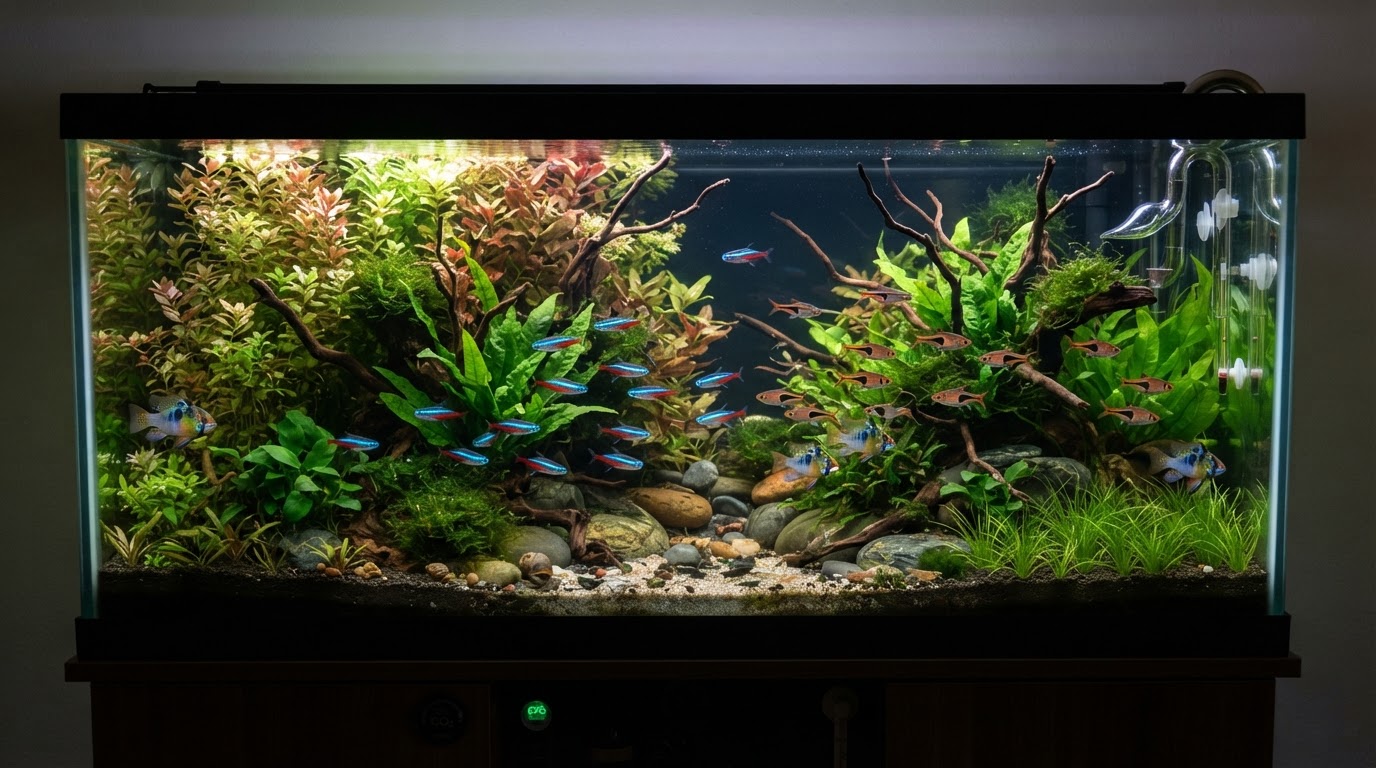
Consistent aquarium maintenance is what separates a thriving display from a recurring problem tank. Weekly tasks include testing core parameters, trimming fast-growing plants, and removing uneaten food before it decays. These small, frequent actions prevent the drift that accumulates into a crisis, and they are far easier to maintain than to recover from once the system has fallen out of balance.
Monthly aquarium maintenance expands to a 20–30% water change, rinsing mechanical filter sponges in discarded tank water, and deep-cleaning the substrate with a gravel vacuum to lift trapped detritus. The water change dilutes dissolved wastes that no filter can fully remove, and the substrate vacuum prevents the anaerobic pockets that can release hydrogen sulfide and stress or kill livestock.
Seasonal aquarium maintenance covers inspecting heater and pump seals, replacing UV lamps whose germicidal output has degraded, and calibrating refractometers and test kits so your readings stay trustworthy year-round. These less frequent tasks are easy to skip because nothing seems to break, but they are what prevent the equipment failures that cause the most costly livestock losses.
A written aquarium maintenance schedule turns these habits into a reliable system rather than a reaction to problems, and outsourcing the routine to a local specialist keeps it consistent even when travel, workload, or livestock changes make self-care hard to maintain. The cadence that works is the one you can sustain, not the one that looks most thorough on paper.
Testing is the backbone of any aquarium maintenance routine, because the parameters you cannot see are the ones that cause the most damage. Ammonia and nitrite should read zero at every test, nitrate should stay below the level that fuels algae and stresses livestock, and pH should remain stable rather than swinging between visits. A test log makes drift obvious; without one, you are guessing.
Filter maintenance is the other backbone. The biological filter that converts ammonia to nitrate lives in your filter media, and cleaning it the wrong way — rinsing in tap water, replacing all media at once — strips the bacteria and restarts the cycle. Rinse media in discarded tank water, never replace all of it at once, and the filter keeps doing its job instead of crashing the tank after a cleaning.
Build in time to observe the livestock. A fish that is eating less, hiding more, or showing faded coloration is telling you something before a test kit will, and catching a health problem early is what separates routine aquarium maintenance from a crisis-driven scramble. The routine that includes observation is the one that keeps a tank healthy for years rather than until the next emergency.
Finally, adjust the routine as the tank matures. A newly cycled system may need weekly attention while the biology stabilizes, while an established tank may do fine on a lighter schedule. The aquarium maintenance routine that evolves with the tank is the one that serves the livestock, and a rigid schedule that never changes is one that eventually either over-serves a stable system or under-serves a demanding one. Let the tank's condition guide the cadence, not the other way around.
Need professional help with residential aquarium maintenance?
Connect with listed aquarium specialists serving residential and commercial facilities.