

Fish Tank Cleaning Essentials
A simple, repeatable approach to fish tank cleaning that protects both water and livestock.
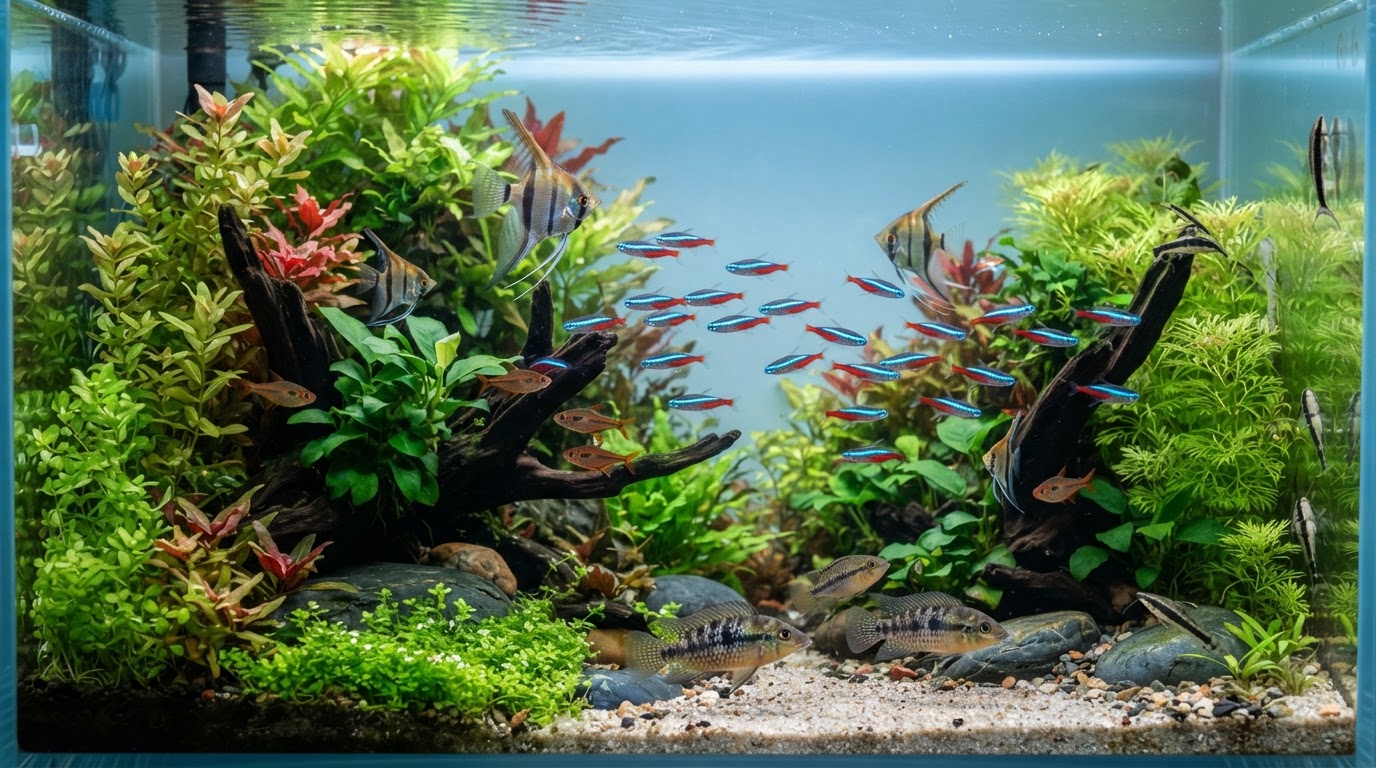
Effective fish tank cleaning is gradual, not drastic. Removing a portion of the water dilutes wastes without shocking the biological filter that keeps ammonia and nitrite at zero, which is why frequent small changes outperform rare large ones. The fish that survive a 20% weekly change are the same fish that crash during a 50% change done once a month.
During fish tank cleaning, rinse mechanical sponges in discarded tank water — never tap water — so the beneficial bacteria colony survives while the detritus washes away. Tap water's chlorine kills the bacteria that process waste, and a cleaned filter that has lost its bacteria is a filter that restarts the nitrogen cycle, which is how a cleaning causes an ammonia spike.
Consistent, light fish tank cleaning every week or two prevents the heavy cleanup that stresses fish and destabilizes water chemistry. The tank that is cleaned lightly and often never needs the deep overhaul that strips the biological filter and restarts the cycle, which is why a modest routine is more sustainable than an ambitious one that the owner abandons.
If you keep a high-bioload tank or feed heavily, expect to clean more often rather than less — waste accumulates faster in crowded systems, and skipping a cycle quickly turns clear water cloudy. A documented routine keeps each fish tank cleaning visit predictable and the livestock thriving instead of merely surviving, which is the difference a consistent schedule makes.
Algae control is part of cleaning, but it starts with nutrients. The algae on the glass feeds on the nitrate and phosphate in the water, and the only permanent solution is keeping those nutrients low through water changes and careful feeding. Scraping algae without addressing the nutrients that feed it is a cycle that never ends, and a cleaning routine that ignores water quality is just cosmetics.
Material awareness is essential. Acrylic scratches far more easily than glass, and the pads that are safe on one material will damage the other. A dedicated acrylic-safe pad costs a few dollars and prevents the permanent haze that a glass scraper inflicts on an acrylic panel on the first pass, which is the most common cleaning damage owners inflict on their own tanks.
Observe the livestock during every cleaning. A fish that is hiding, breathing rapidly, or refusing food is telling you something is wrong before the water tests do, and the cleaning that pauses to watch the animals is the cleaning that catches problems early. Fish tank cleaning is not just about the glass — it is about the living system the glass contains, and the animals are the most sensitive indicators of its health.
Finally, recognize that the essentials are about protecting the biology, not just the appearance. The fish tank cleaning that preserves the biological filter, changes water gradually, and cleans the equipment as well as the glass is the cleaning that keeps livestock healthy, while the cleaning that sterilizes the tank is the cleaning that resets the biology and invites the problems it was meant to prevent. The essentials are simple, and doing them consistently is what separates a thriving tank from a recurring problem.
Need professional help with residential aquarium maintenance?
Connect with listed aquarium specialists serving residential and commercial facilities.