

What a Fish Tank Cleaning Service Should Include
A checklist of tasks any complete fish tank cleaning service should cover per visit.
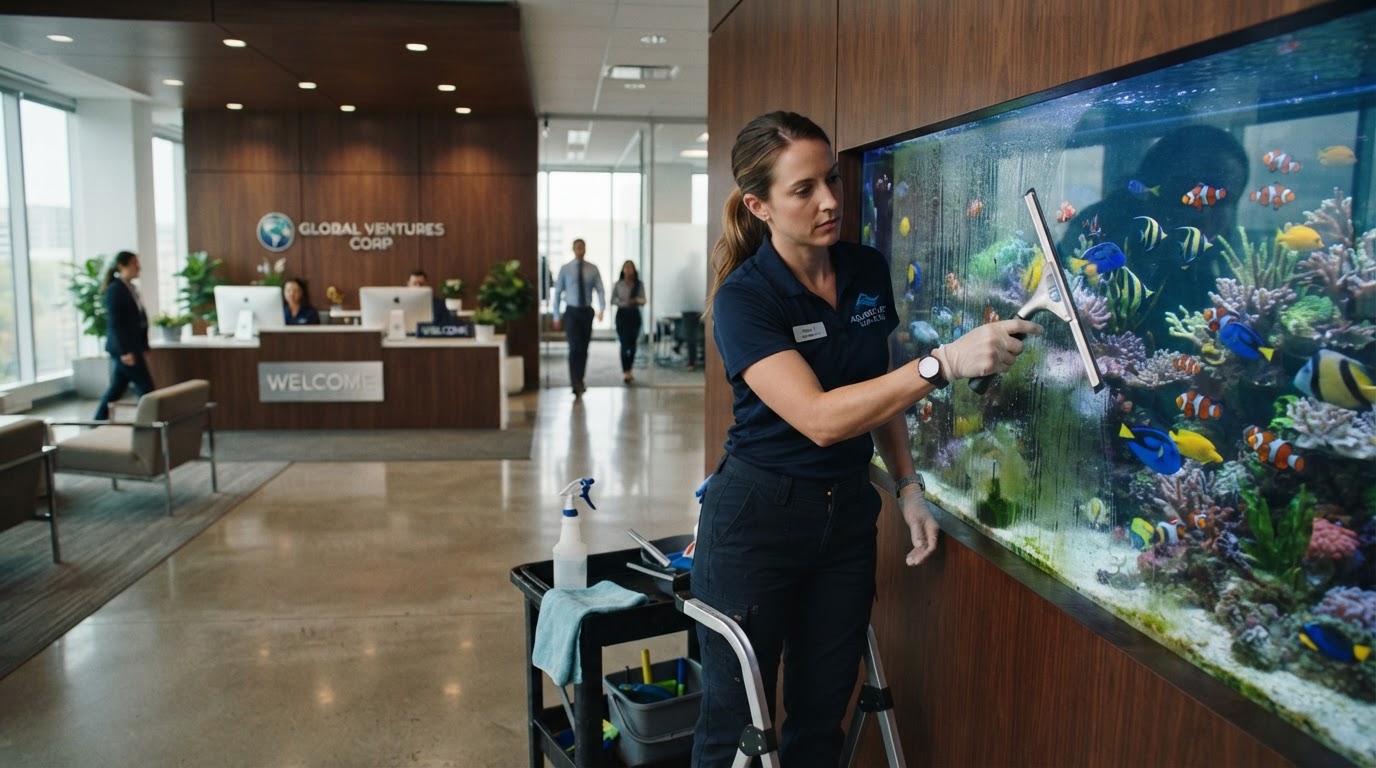
A complete fish tank cleaning service starts with a water test so the technician can tailor the visit to what the tank needs, rather than applying a rigid routine. The test reveals the ammonia, nitrite, nitrate, and pH that indicate the tank's biological health, and the cleaning without a test is just a glass wipe that ignores the system it is meant to serve.
Core tasks in any fish tank cleaning service include a partial water change, substrate vacuuming, panel wiping with the correct pad for glass or acrylic, and a flow check on pumps and filters. Each of these addresses a different part of the system — diluting waste, removing detritus, restoring visibility, and confirming equipment function — and skipping any one leaves a gap that compounds over time.
A dependable fish tank cleaning service ends with logged parameters and a note on anything to watch before the next visit — turning cleaning into continuity. The log is what makes each subsequent visit more effective, because a technician who knows the tank's history can spot a drift that a one-time cleaner would never see.
Beyond the basics, a thorough fish tank cleaning service inspects heater accuracy, clears intake blockages, and trims overgrown plants so the system stays balanced, which is what separates a recurring service from a one-time glass wipe that leaves hidden problems unaddressed. Equipment inspection is what catches a failing heater or a clogged intake before it becomes a livestock crisis.
Temperature should be checked at every visit. A heater that drifts or a chiller that cycles incorrectly introduces the temperature swings that stress fish and invite disease, and a cleaning that does not verify temperature is missing the factor that most directly affects livestock health. A thermometer and a minute of attention are all it takes to catch a drift before it harms the fish.
Livestock observation is part of a complete service. A technician who watches the fish during the cleaning — noting reduced feeding, hiding, or rapid breathing — catches problems that the water tests alone would miss, because the animals respond to stress before the chemistry reflects it. The cleaning that ignores the livestock is a cleaning that serves the tank's appearance, not its inhabitants.
Documentation completes the service. The parameters tested, the volume changed, and the issues noted should be recorded at every visit so the history informs future care. A fish tank cleaning service without a log is just a series of isolated cleanings, while one with documentation is a system that learns your tank's patterns and catches problems before they become visible.
Finally, the service should protect your property as well as your livestock. A complete fish tank cleaning service uses containment mats, sealed transport for water, and careful routing of drains to protect your floors and walls, because the water in a tank is a risk to the home as well as the animals. The provider who treats your property with the same care as the tank is the one worth hiring over the one who leaves puddles on the hardwood.
Need professional help with residential aquarium maintenance?
Connect with listed aquarium specialists serving residential and commercial facilities.