

Freshwater Aquarium Cleaning Tips
Simple, repeatable freshwater aquarium cleaning practices that protect water quality and livestock.
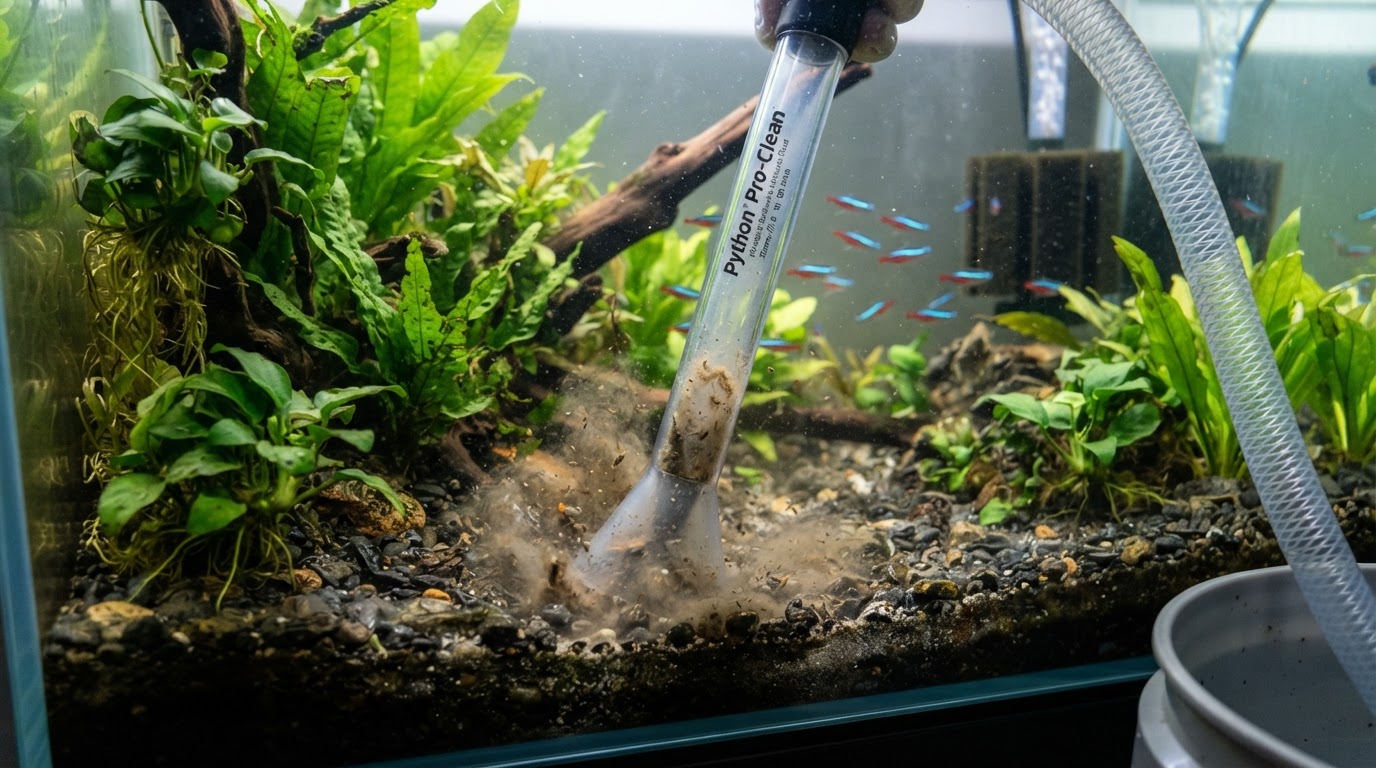
Freshwater aquarium cleaning is simpler than marine care, but it still rewards a careful, consistent approach over a rushed one. The goal is a tank whose water stays clear and whose livestock stays healthy, and freshwater aquarium cleaning that preserves the biological filter while removing waste is what achieves that, not a heavy-handed scrub that resets the system.
The core of freshwater aquarium cleaning is the partial water change — 20–30% every one to two weeks — which dilutes the nitrate and dissolved organics that accumulate faster than any filter can process them. The change should use dechlorinated or RODI water at a temperature matched to the tank, because a cold or chlorinated refill can shock tropical fish more than the waste the change was meant to remove.
Substrate vacuuming is the other essential in freshwater aquarium cleaning. A gravel vacuum lifts the uneaten food and fish waste that settle where the filter cannot reach, and removing that detritus before it breaks down prevents the dissolved nutrients that fuel algae and stress livestock. The substrate vacuumed lightly and often never needs the deep clean that the one neglected for months eventually requires.
Filter maintenance in freshwater aquarium cleaning means rinsing mechanical sponges in discarded tank water, never tap water, to preserve the beneficial bacteria that process ammonia and nitrite. The chlorine in tap water kills those bacteria, and a cleaned filter that has lost its biology is a filter that restarts the nitrogen cycle, which is how a well-intentioned cleaning causes an ammonia spike that crashes the tank.
Algae control in freshwater aquarium cleaning is a function of nutrient balance, not elbow grease. The algae on the glass feeds on the nitrate and phosphate in the water, and the only permanent solution is keeping those nutrients low through water changes and careful feeding. Scraping the glass without addressing the nutrients that feed the algae is a cycle that never ends, and the cleaning that ignores water quality is just cosmetics.
Material awareness matters in freshwater aquarium cleaning. Glass tolerates razor blades and stiff pads; acrylic does not, and a scraper that is safe on one material will permanently scratch the other. A dedicated acrylic-safe pad costs a few dollars and prevents the haze that a glass scraper inflicts on an acrylic panel, which is the most common damage a careless cleaning inflicts on a tank.
Observe the livestock during every freshwater aquarium cleaning. A fish that is eating less, hiding, or breathing rapidly is telling you something is wrong before the water tests do, and the cleaning that pauses to watch the animals is the cleaning that catches problems early. The tank is not just the water and the glass — it is the living system inside, and the animals are the most sensitive indicators of its health.
Finally, keep the routine sustainable. The freshwater aquarium cleaning plan that fits the owner's life is the one that gets done, and the elaborate routine that is abandoned after a month is worth less than the modest one maintained for years. The livestock thrive on consistency, not intensity, and the owner who cleans lightly and often outperforms the one who cleans heavily and rarely — and the same is true for the professional a busy owner hires to keep the routine intact.
Need professional help with residential aquarium maintenance?
Connect with listed aquarium specialists serving residential and commercial facilities.