

Aquarium Power Outage Survival: How to Prevent Total Livestock Loss
Critical action steps when power fails: oxygen depletion timelines, battery aerators, temperature insulation, and emergency dispatch.
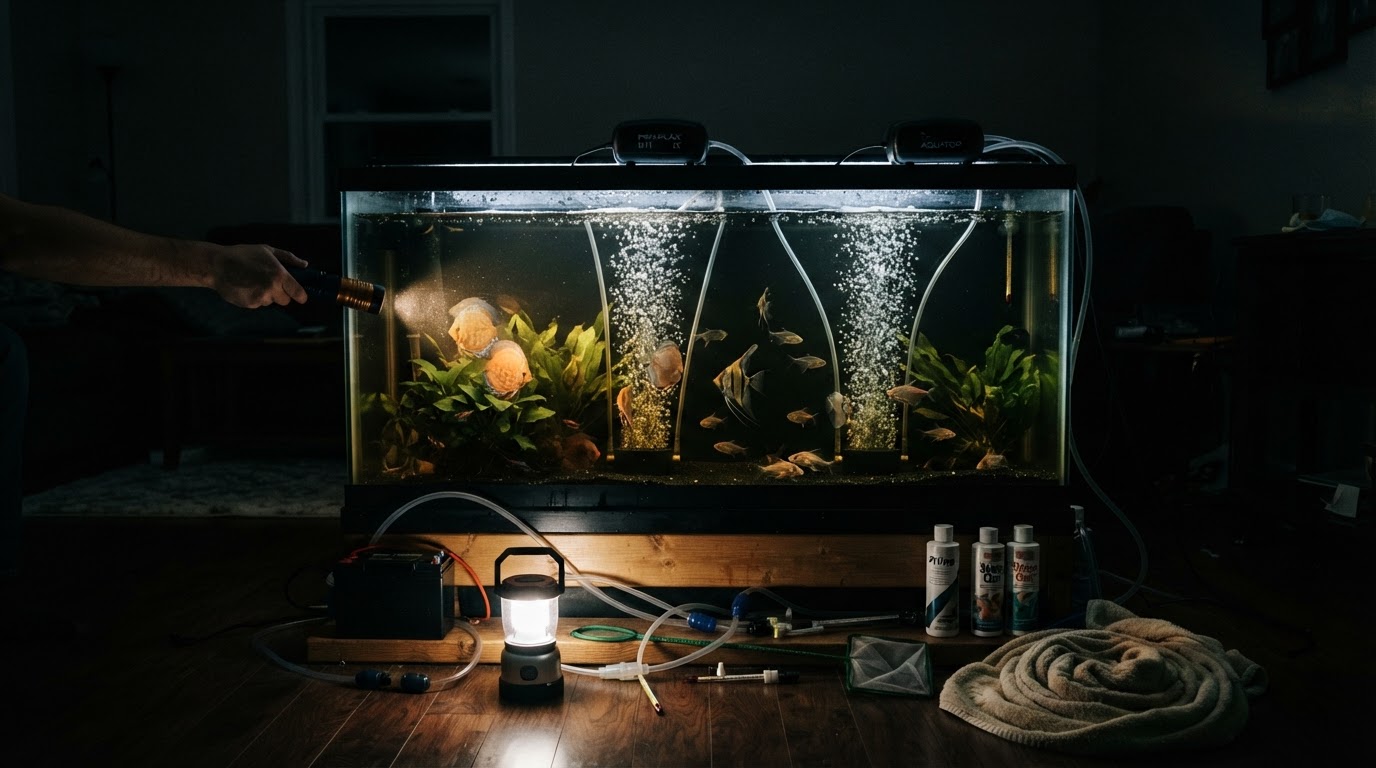
In a heavily stocked aquarium, dissolved oxygen drops to life-threatening levels in as little as 2 to 4 hours without active surface agitation. During severe storms and prolonged blackouts, temperature drops or summer heat waves exacerbate the crisis, because cold water holds more oxygen but warm water holds less, and a tank that was already near its thermal limit when the power failed has the shortest survival window of all.
The primary priority during any outage is aeration. Battery-operated air pumps with weighted airstones positioned near the water surface maintain gas exchange and prevent surface biofilm from sealing off atmospheric oxygen. A $20 battery air pump kept in a drawer is the cheapest insurance a tank owner can buy, and it has saved more livestock during outages than any other single piece of equipment.
Never feed fish during an extended power outage. Digestion consumes massive amounts of oxygen and generates toxic ammonia that biological filters cannot process without water circulation. Fish can go days without food safely, but they cannot survive even a few hours without oxygen, so feeding them during an outage is one of the worst things a well-meaning owner can do.
Temperature management is the second priority. In winter, wrap the tank in blankets or sleeping bags to slow heat loss — even a few degrees of insulation buys hours of survival time. In summer, float frozen water bottles or sealed bags of ice in the tank to hold temperature down, and avoid opening the lid unless necessary, since every opening releases the trapped stable air layer.
Emergency service providers maintain mobile generators and emergency oxygen delivery systems to rescue prized livestock during major utility failures. If your tank contains high-value livestock and the outage is expected to last more than a few hours, calling an emergency aquatic service within the first hour — not after the fish are already gasping at the surface — is what makes the difference between a rescue and a loss.
A battery backup system — a UPS or a dedicated aquarium power station — can keep return pumps and wavemakers running for hours during an outage. These systems are inexpensive relative to the value of the livestock they protect, and they bridge the gap between the outage's start and either the restoration of power or the arrival of an emergency technician with a generator.
Finally, plan for recovery. When power returns, do not immediately restart every pump at full intensity. Ramp circulation back up gradually, test water parameters before feeding, and watch the livestock for signs of ammonia or nitrite stress. A tank that survived the outage can still crash during the recovery if the biological filter was damaged by the period without flow, and testing is what catches that before it becomes visible.
Build a written outage plan before the emergency happens, because the steps that save livestock are the ones that are easy to forget in the panic of a dark house and a tank full of stressed fish. A checklist kept near the tank — battery aerator location, insulation blanket, emergency service number, feeding pause — turns a crisis into a manageable routine, and the five minutes spent preparing it are worth the livestock it protects. The outage that catches an unprepared owner is the outage that loses livestock, and the preparation that costs nothing but attention is the cheapest insurance a tank owner can have, which is why every aquarium that holds valuable animals should have a plan that the owner or the service provider has rehearsed before the power ever goes out.
Need professional help with emergency aquarium & life support?
Connect with listed aquarium specialists serving residential and commercial facilities.