

Spring Koi Pond Opening & Biological Filtration Awakening
How to wake up your outdoor pond filtration, replace UV clarifier bulbs, and safely start feeding coldwater fish as temperatures rise.
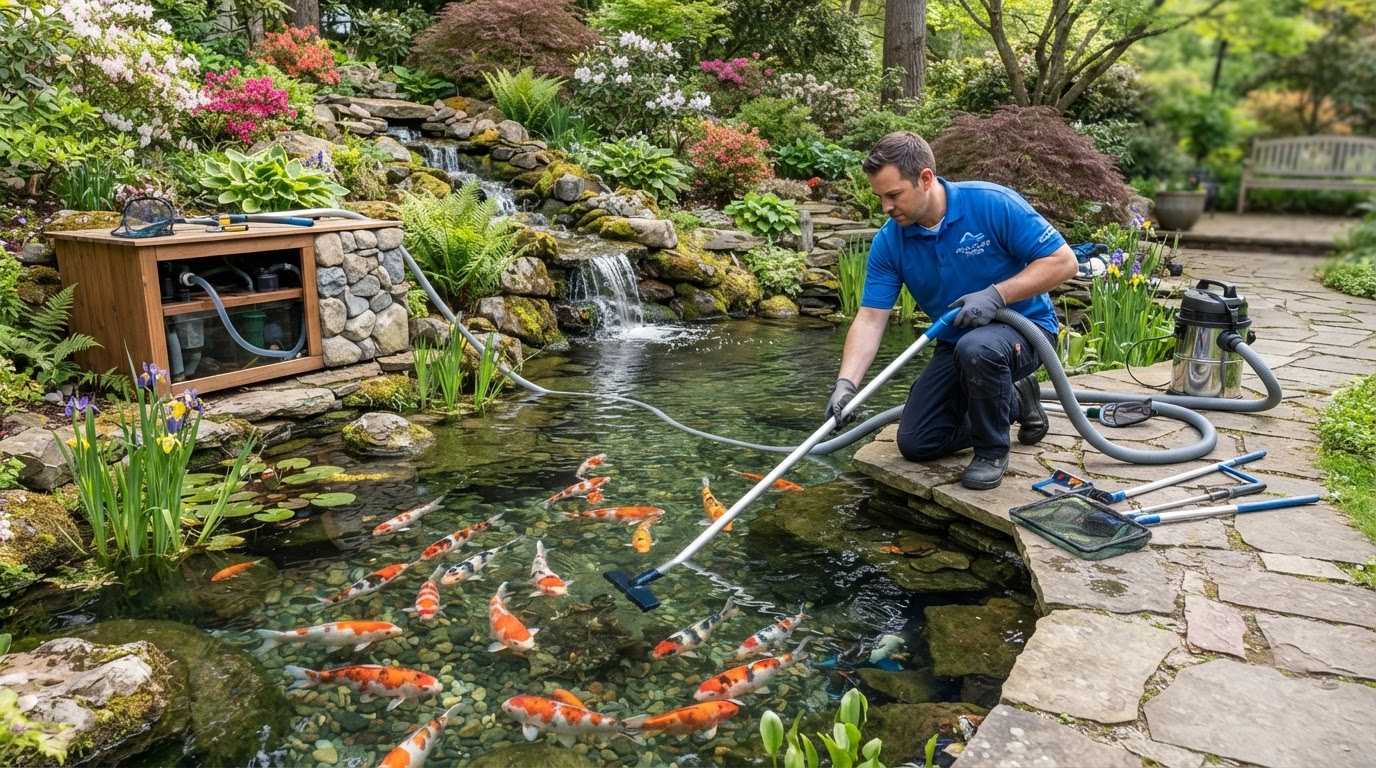
As winter recedes and water temperatures climb above 50°F (10°C), outdoor ponds enter a delicate biological transition period. The immune systems of koi and goldfish reactivate slowly, while opportunistic parasites and bacteria thrive in warming waters. This is the most dangerous season for pond fish, because their defenses are still sluggish while the pathogens that threaten them are already active and reproducing.
A thorough spring service begins with vacuuming leaves, twigs, and bottom sludge that accumulated beneath winter pond netting. Decaying organic material releases hydrogen sulfide and consumes oxygen, creating toxic pockets if left undisturbed, and the spring cleanup that removes this accumulated waste is what prevents the water quality crashes that claim fish as temperatures rise.
UV clarifier quartz sleeves must be acid-cleaned and the ultraviolet lamps replaced annually. Even if a UV bulb still glows blue, its germicidal wavelength output degrades significantly after 8,000 hours of continuous operation — roughly one season of use. A bulb that looks fine to the eye may be providing no sterilization at all, and replacing it each spring is the only reliable way to keep algae and pathogens under control as the water warms.
Feeding must resume gradually. Start with a low-protein wheat germ food when water temperatures consistently exceed 50°F, and transition to higher-protein summer foods only when temperatures reliably exceed 60°F. Feeding heavy protein too early, while the fish's digestive system is still sluggish from winter dormancy, can cause internal bacterial infections that are far harder to treat than a simple delay in the feeding schedule.
Water testing takes on heightened importance in spring. The biological filter that has been dormant all winter needs time to ramp up to the increasing waste load as fish become active and start eating again, and ammonia and nitrite spikes are common during this transition. Test twice weekly until the filter catches up, and keep a bottle of dechlorinator and an ammonia binder on hand for emergency intervention.
Inspect the pond's physical infrastructure before the season starts. Liner tears, cracked plumbing, and failing pump seals are easier to spot and repair in spring than in the middle of summer when the pond is fully stocked and the fish are at their most active. A thorough physical inspection now prevents the equipment failures that lead to fish losses when the water is warmest and oxygen is most depleted.
Finally, plan the summer maintenance schedule around the pond's biology rather than the calendar. A pond's bioload peaks in late summer when fish are largest, feeding is heaviest, and oxygen demand is highest. Scheduling more frequent service visits during that peak season — and adjusting filtration capacity to handle it — is what keeps a pond healthy through the most stressful months of the year, when neglect is most costly.
A koi pond is a multi-year investment in livestock that can live for decades, and the seasonal care that protects that investment is worth the recurring cost. The koi that survive a harsh winter are the koi that were prepared in the fall and checked in the spring, and the pond that is serviced on a seasonal schedule outlasts one that is serviced only when a problem appears. The cost of a seasonal service visit is modest compared to the value of the fish it protects, and the provider who understands the seasonal biology of a pond is the one whose care keeps the fish thriving year after year, which is the real return on the investment in a water feature that is meant to last.
Need professional help with outdoor koi pond & water feature care?
Connect with listed aquarium specialists serving residential and commercial facilities.