

The Science of Planted Aquascapes: Balancing High Light, CO2 & Nutrients
Mastering the Estimative Index fertilizing method, pressurized CO2 drop checkers, and pruning techniques for immaculate Nature Aquariums.
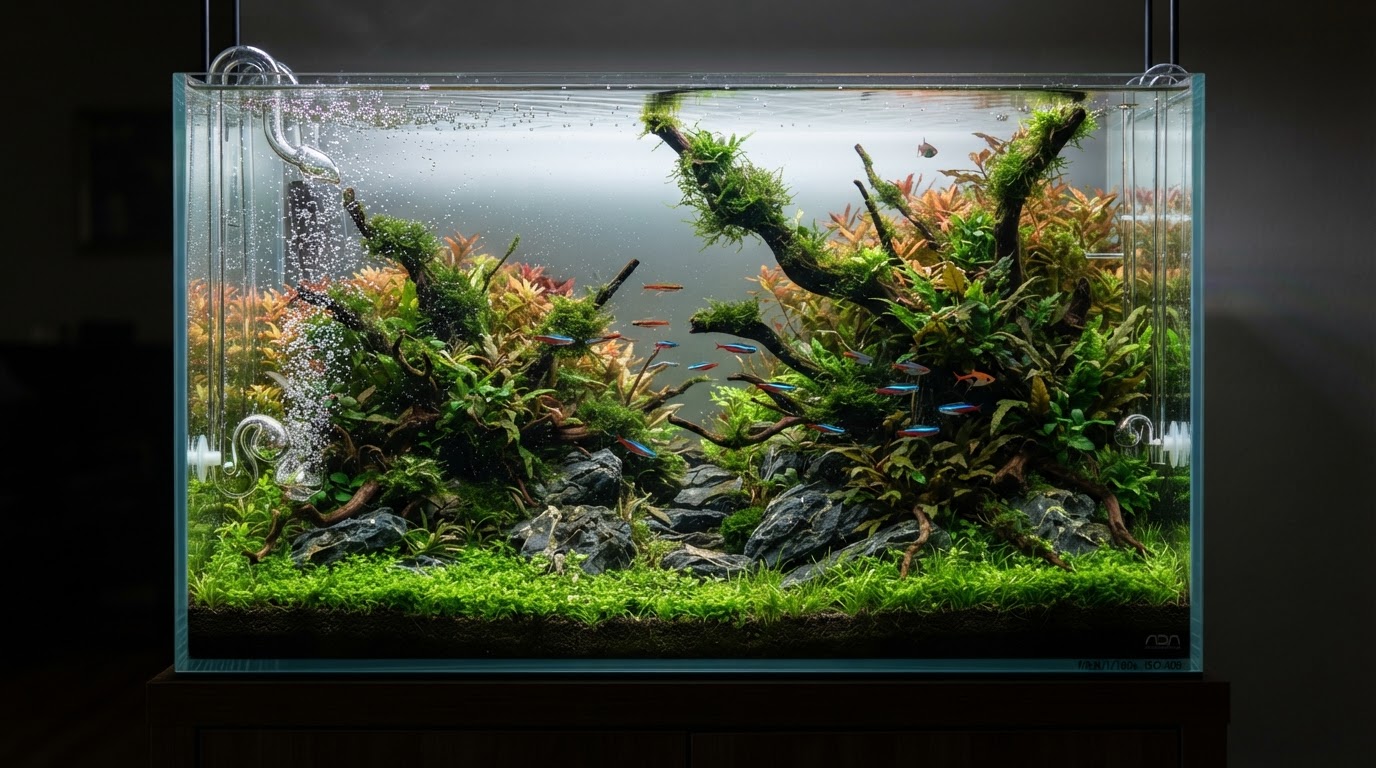
The Japanese Nature Aquarium style popularized by Takashi Amano represents one of the highest expressions of living art. However, high-intensity lighting without adequate carbon dioxide and balanced fertilization results in rapid, uncontrollable algae growth that can smother a planted tank within days. The relationship between light, CO2, and nutrients is a triangle — change one side and the other two must follow, or the system falls out of balance.
Pressurized CO2 injection dissolves carbon directly into the water column, allowing aquatic plants to photosynthesize at peak capacity under high light. A calibrated bubble counter, solenoid valve on a timer, and 4-dKH drop checker ensure safe saturation around 30 ppm without suffocating fish. The drop checker is the single most important safety device in a pressurized CO2 system, because it gives a visual reading of dissolved CO2 that prevents the gas from reaching levels dangerous to livestock.
The Estimative Index dosing method provides a straightforward framework for fertilization: dose a surplus of all required nutrients weekly and reset with a water change, rather than trying to match exact uptake rates. This approach removes the guesswork from fertilization and ensures that no single nutrient becomes the limiting factor that triggers algae, which thrives in unbalanced systems where one nutrient is scarce and others are abundant.
Weekly maintenance requires meticulous trimming of stem plants with specialized wave scissors to promote bushy, dense growth patterns, alongside thorough siphoning of organic mulm from delicate carpeting plants like Micranthemum 'Monte Carlo.' Trimming is not just aesthetic — it removes older growth that accumulates algae and encourages fresh, vibrant shoots that keep the aquascape looking intentional rather than overgrown.
CO2 safety cannot be overstated. A solenoid valve that shuts off CO2 at night — when plants stop photosynthesizing and fish continue respiring — is essential. Without it, CO2 can accumulate to lethal levels overnight, and the first sign is often fish gasping at the surface in the morning. A pH controller adds an additional layer of safety by monitoring the water chemistry directly rather than relying on a visual drop checker alone.
Algae is the symptom, not the disease. When algae appears in a planted tank, it signals an imbalance — too much light relative to CO2, too little of one nutrient, or inconsistent maintenance. Treating algae with chemicals addresses the symptom but not the cause, and the algae returns as soon as the treatment stops. The real solution is rebalancing the light-CO2-nutrient triangle so the plants outcompete the algae naturally.
Finally, accept that a planted aquascape is a living composition that evolves. The arrangement you start with is not the one you will have in three months or six months, and part of the art is guiding that evolution through pruning, replanting, and adjustment. A skilled aquascaper reads the tank's direction and shapes it intentionally rather than fighting the growth patterns the plants are determined to follow.
A planted aquascape rewards patience above all, and the balance between light, CO2, and nutrients that produces a stable display is one that emerges over weeks of consistent care rather than days of aggressive adjustment. The aquascaper who changes one variable at a time, observes the response, and adjusts the next is the one whose tank stabilizes, while the one who changes everything at once is the one whose tank never finds balance. The discipline of incremental adjustment is what turns a collection of plants into a living composition that matures gracefully, and the service provider who understands that rhythm is the one whose maintenance builds the display rather than resetting it, which is why a planted tank is as much about consistency as it is about chemistry.
Need professional help with planted tank care & aquascaping?
Connect with listed aquarium specialists serving residential and commercial facilities.