

Starphire Low-Iron Glass vs. Standard Float Glass: Is the Premium Worth It?
An optical comparison of low-iron ultra-clear glass, edge coloration, scratch resistance, and when to invest for your dream tank.
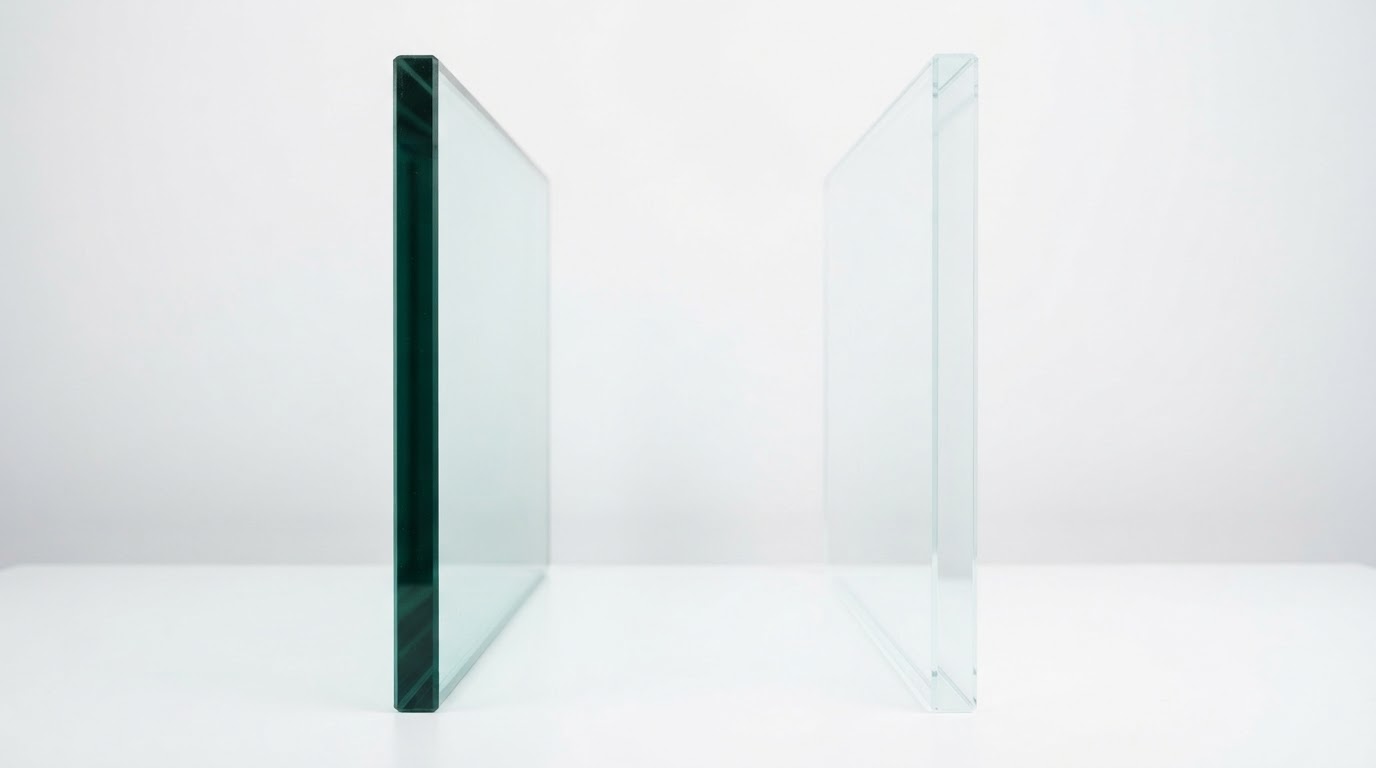
Standard float glass contains residual iron oxide, imparting a distinct greenish tint that becomes increasingly pronounced as glass thickness exceeds 10mm (3/8 inch). When viewing colorful corals or vibrant tropical fish, this green hue dulls reds, purples, and blues, muting the very colors the tank was designed to showcase. On a large custom aquarium, the tint is not a minor cosmetic issue but a visible distortion of the entire display.
Starphire and equivalent low-iron glass varieties undergo specialized formulation that removes nearly all iron content, achieving over 91% light transmittance and true color fidelity. When viewing an aquarium through ultra-clear glass, the barrier between observer and aquatic life practically disappears, and the colors of fish and corals appear as vivid as they would in a photograph rather than through a green-tinted window.
For large custom aquariums with panel thicknesses of 1/2 inch to 3/4 inch, low-iron glass is universally recommended for front and side viewing panels to showcase true livestock coloration without distortion. On a tank where the investment in livestock and cabinetry runs into thousands of dollars, the incremental cost of low-iron glass is a fraction of the total and pays dividends in visual impact every day.
The trade-off is scratch resistance. Low-iron glass is slightly softer than standard float glass, making it marginally more susceptible to scratching from gravel, magnetic scrapers, or careless cleaning. The difference is small enough that most owners do not notice it in practice, but it is a reason to use dedicated acrylic-safe cleaning pads rather than razor blades on any high-end glass panel.
Edge coloration is the most visible difference. Standard glass shows a bright green edge where panels meet, while low-iron glass shows a nearly clear edge that is barely visible. On a rimless or mitered-tank installation, the green edge is the first thing a visitor notices, and low-iron glass eliminates it entirely, which is why it is standard on architectural installations where the craftsmanship is meant to be seen.
Weight is another factor. Low-iron and standard glass of the same thickness weigh nearly the same, so there is no structural penalty for choosing the premium option. The decision is purely optical — and on a tank that is the centerpiece of a room, the optical improvement is worth the premium for most owners who are already investing in custom cabinetry and premium livestock.
Finally, consider the lighting. Low-iron glass transmits more light, which means your LED fixtures and coral colors will appear more vibrant through low-iron panels than through standard glass of the same thickness. The investment in lighting that brings out coral coloration is only fully realized when the viewing panels do not tint the light before it reaches the observer, which is the case for low-iron glass and not for standard float glass.
The choice between low-iron and standard glass is a long-term investment that should match the value of the livestock it displays, and for a reef or a showcase display the premium glass is worth the cost. A tank that will hold thousands of dollars of coral and sit in a finished room for a decade is not the place to save a fraction of the cost on the one component that determines how the display is seen, and the clarity that low-iron glass provides is the clarity that makes the investment in the livestock visible rather than muted. The glass is the window through which the entire display is judged, and the upgrade that costs a little more upfront pays off every day for the life of the tank, which is why a provider who specializes in custom installations will almost always recommend the low-iron option for any display that is meant to be a showcase.
Need professional help with custom aquarium design & installation?
Connect with listed aquarium specialists serving residential and commercial facilities.