

Understanding ICP-OES Water Testing for Advanced Reef Tanks
How laboratory mass spectrometry reveals trace element deficiencies, heavy metal toxicity, and mysterious coral recession.
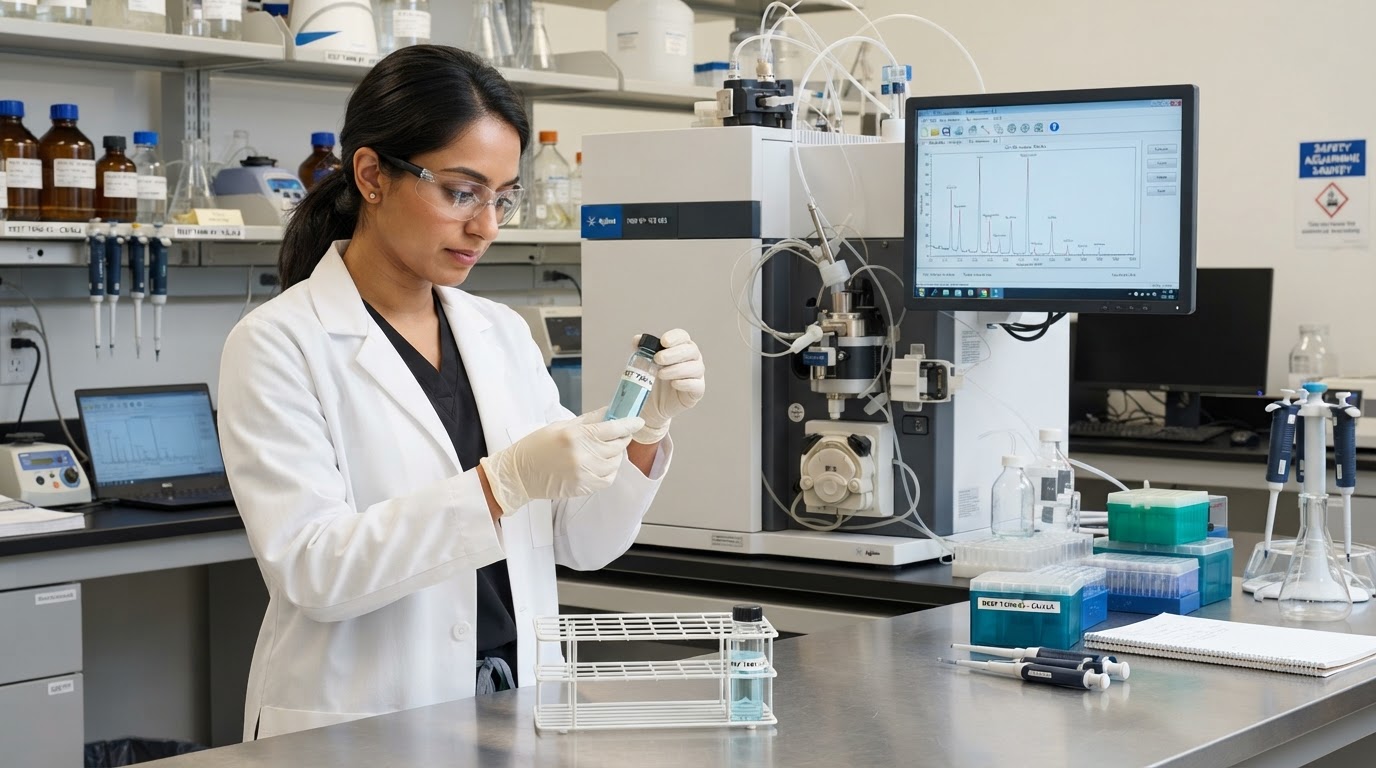
Traditional hobbyist titration test kits are prone to human color-matching errors and only test a handful of parameters like calcium, alkalinity, and magnesium. ICP-OES (Inductively Coupled Plasma Optical Emission Spectrometry) vaporizes a water sample in 10,000°K argon plasma to measure dozens of elements down to parts per billion, revealing deficiencies and toxicities that standard test kits cannot detect at all.
ICP testing frequently uncovers hidden killers such as copper leaching from corroded heater magnets, tin from PVC cement, or zinc from brass fittings. These heavy metals accumulate silently in a reef system, stressing livestock and suppressing coral coloration long before any visible symptom appears. A standard test kit will never detect these trace contaminants, which is why ICP analysis is the only way to find them before they cause losses.
ICP also reveals critical deficiencies in trace elements like iodine, strontium, potassium, and boron that cause pale coral coloration or tissue necrosis. Reef keepers who supplement these elements based on guesswork often overdose, which can be as harmful as deficiency. ICP testing replaces guesswork with data, allowing a dosing protocol tailored to the specific biomass and consumption rate of the individual tank.
Leading marine maintenance firms incorporate quarterly ICP analysis into their service contracts to formulate customized trace element dosing protocols for each client's unique biomass. The data from each test builds a trend over time, so a technician can see when a reef's consumption of a particular element is rising — a sign that the coral population is growing — or falling, which can indicate a health problem before it becomes visible.
The process is simple for the owner. Most ICP testing services mail a sterile sample tube, the owner or technician fills it with tank water, and the results arrive by email within days. The cost is modest relative to the value of a reef full of livestock, and the peace of mind of knowing your water contains no hidden heavy metals is worth the investment alone.
Interpreting ICP results requires expertise. A high reading of an element does not always mean you should dose less of it — sometimes it means the element is present but unavailable to corals because of a binding interaction with another parameter. A qualified technician reads the full panel in context, adjusting dosing based on the relationships between elements rather than treating each number in isolation.
Finally, use ICP as a diagnostic tool, not a replacement for regular testing. Standard test kits still have their place for day-to-day monitoring of calcium, alkalinity, and magnesium, because those parameters change too quickly for quarterly ICP to track. ICP fills the gap that standard kits cannot — the trace elements and contaminants that determine long-term coral health but that no hobby-grade test can measure.
The cost of quarterly ICP testing is trivial compared to the value of the livestock it protects, and for a reef holding hundreds or thousands of dollars of coral the test is one of the cheapest forms of insurance available. A trace metal spike that goes undetected can crash a tank in days, and the lab test that catches it before the livestock show stress pays for itself the first time it prevents a loss. The reef that is tested quarterly is the reef that reveals its chemistry trends over time, and the data is what lets a service provider manage the system rather than react to it, which is why the leading marine maintenance firms treat ICP as a standard part of a reef service plan rather than an optional diagnostic.
Need professional help with saltwater & reef tank care?
Connect with listed aquarium specialists serving residential and commercial facilities.