

Saltwater Aquarium Cleaning Tips for Marine Tanks
Equipment-safe saltwater aquarium cleaning practices that protect corals, fish, and invertebrates.
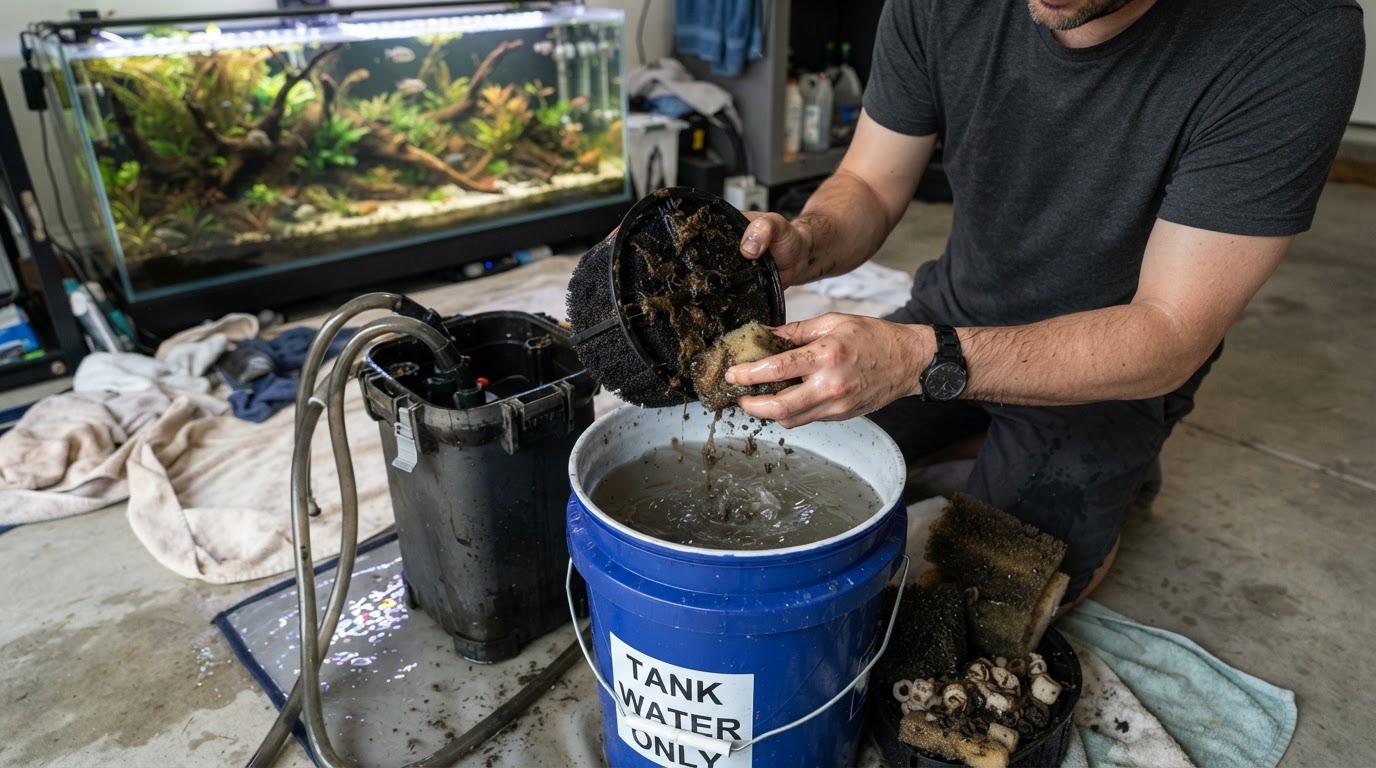
Saltwater aquarium cleaning is different from freshwater cleaning because the livestock is more sensitive and the equipment is more complex. A rushed or careless saltwater aquarium cleaning can stress corals and fish more than the detritus it removes, which is why the technique matters as much as the frequency.
The foundation of saltwater aquarium cleaning is the controlled water change using pre-mixed saltwater that has been circulating for at least 24 hours, not a fresh mix that can burn invertebrates. Temperature matching the new water to the tank prevents osmotic shock, and a gradual change — 10–20% at a time — dilutes wastes without destabilizing the chemistry that marine livestock depends on, which is why patience is the most important tool in the routine.
Equipment cleaning is the largest part of saltwater aquarium cleaning. Protein skimmer throats accumulate biofilm that reduces foam production, return pump intakes clog with detritus that drops flow, and powerhead nozzles collect calcium buildup that restricts output. Cleaning each of these restores the life support the marine livestock depends on, and skipping the equipment to clean only the glass is saltwater aquarium cleaning that serves the appearance, not the animals.
Panel cleaning in saltwater aquarium cleaning requires the right pad for the material. Acrylic scratches far more easily than glass, and a scraper that is safe on one will permanently haze the other, so a dedicated pad for the tank's material is non-negotiable. Coralline algae on the glass may need a metal blade, while the same blade on acrylic would ruin the viewing panel in a single pass.
Substrate care in saltwater aquarium cleaning means siphoning the sandbed to lift detritus without stirring it into the water column, where it would cloud the display and stress the livestock. A gentle siphon held just above the surface removes the accumulated waste without disturbing the deeper layers where anaerobic bacteria process nitrate, which is why the technique is as important as the frequency.
Coral and rock work is part of saltwater aquarium cleaning that freshwater does not require. Fragments knocked loose during cleaning can land on and irritate neighboring corals, and a careless hand can break a colony that took years to grow. The cleaning that works around the aquascape rather than through it is the cleaning that protects the investment in the livestock, and the technique is what separates a professional from a casual cleaner.
Test after every saltwater aquarium cleaning to confirm the chemistry has not shifted from the water change or the equipment service. Salinity, alkalinity, and temperature should be verified before the tank is left, because a cleaning that introduced a drift is worse than no cleaning at all. The test is the confirmation that the work helped rather than hurt, and it is the step most often skipped by the careless provider.
Finally, document the work. Saltwater aquarium cleaning that logs the parameters tested, the volume changed, and the equipment serviced builds a history that reveals trends and makes the next visit more effective. The marine tank that is managed with a record outlasts the one that is cleaned without one, and the log is what turns a series of visits into a system that keeps the reef stable for the years it takes to grow it.
Need professional help with saltwater & reef tank care?
Connect with listed aquarium specialists serving residential and commercial facilities.