

Silicone Seam Failure: Early Warning Signs Before Your Aquarium Leaks
How to inspect structural silicone joints, identify micro-bubbles, detect seam pulling, and determine when a tank needs emergency resealing.
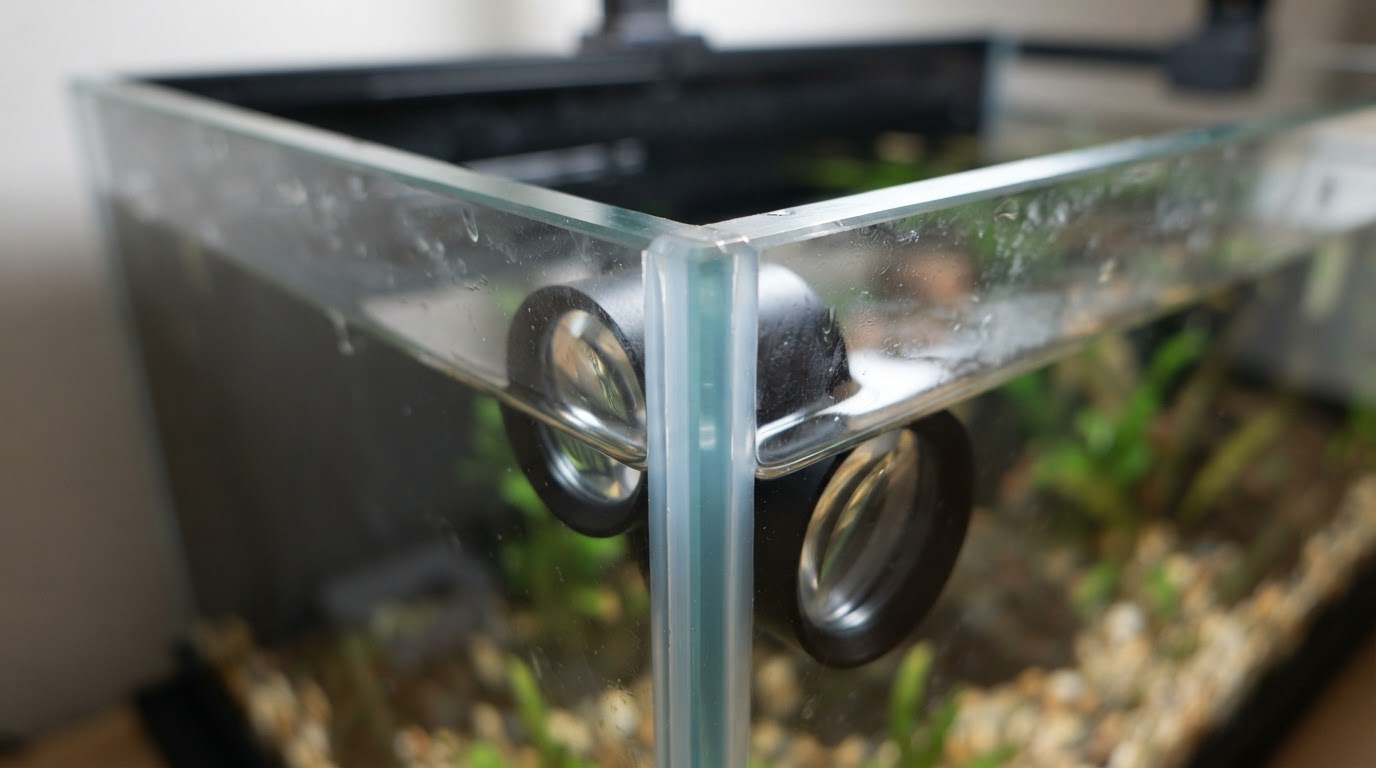
Modern glass aquariums rely entirely on specialized structural silicone to bond glass panes together and absorb hydrostatic pressure. Most high-quality aquariums last 10 to 15 years before silicone elastomeric properties begin to degrade, but the timeline depends on the tank's history of temperature cycling, chemical exposure, and physical stress from settling or impacts that the stand may have absorbed over the years.
Early warning signs of joint compromise include micro-bubbles inside the primary structural seam, silicone pulling away from the glass edge (crazing), or razor-blade cuts caused by aggressive algae scrapers. If bubbles begin linking together into continuous channels, structural failure is imminent — the seal is losing its ability to hold water, and a leak is not a question of if but when.
Inspect seams regularly with a flashlight. Hold the light at an angle to the glass and look for bubbles, discoloration, or separation between the silicone and the glass. A seam that is whitening, shrinking, or losing its elasticity is failing, and the time to act is before the first drip appears — because once a seam lets go on a large tank, the failure is rapid and catastrophic.
Never attempt to patch a leaking tank by smearing fresh silicone over old silicone. New silicone cannot chemically bond to cured silicone, so the patch is a temporary cosmetic fix that fails under pressure. A proper structural repair requires stripping the entire panel joint, chemical surface decontamination, and complete joint injection with new structural silicone — a job for a professional fabricator, not a DIY repair.
Age is a factor. An aquarium over 10 years old with original seams is on borrowed time, and the cost of a professional reseal is far less than the cost of water damage to floors, walls, and cabinetry if a seam fails. Budget for resealing the way you budget for any other major maintenance on a large investment, and do not wait for a leak to motivate the work.
Stress cracks in the glass itself are a separate concern from seam failure. A star crack from an impact, or a stress crack from an uneven or overloaded stand, can propagate slowly and then fail suddenly. Any crack in a structural panel warrants immediate draining and replacement, because glass does not heal and a slow crack becomes a fast failure without warning.
Finally, keep the stand level. A stand that settles unevenly puts torsional stress on the aquarium's seams, accelerating silicone fatigue and creating the conditions for a failure that would not have occurred on a level surface. Check the stand's level annually and shim it if needed, because the few minutes spent leveling are trivial compared to the cost and heartbreak of a catastrophic seam failure.
The cost of a reseal performed preventively is a fraction of the cost of a seam that fails and floods the room, and the inspection that catches the warning signs is the cheapest maintenance a tank owner can perform. A silicone seam that is beginning to separate is a seam that will eventually let go, and the reseal that is scheduled before the failure is a minor inconvenience while the one that follows a flood is a catastrophe that costs the livestock, the flooring, and the drywall. The stand that is kept level, the seams that are inspected, and the technician who flags the warning signs are the safeguards that keep a large tank a feature of the room rather than a liability, and the annual inspection that catches a seam early is the insurance that makes the investment in a large display worth the risk it carries.
Need professional help with aquarium repair & restoration?
Connect with listed aquarium specialists serving residential and commercial facilities.